https://zpravy.aktualne.cz/domaci/strategie-2030-ucit-jen-to-uzitecne-neodrikavat-chapat/r~c2f35300014f11ea9b40ac1f6b220ee8/
https://www.facebook.com/Edu2030plus
středa 13. listopadu 2019

Discipline

J. A. Komenský - Analytická didaktika (1648)
XXIX
Nezačínej vyučovati toho, kdo není připraven k tomu, aby byl vyučován.
Poněvadž není záhodno mluvit k člověku, který nehodlá slyšeti, ukazovati něco tomu, kdo se nehodlá dívati, jíti před tím, kdo nehodlá následovati. Proto se nedoporučuje vyučovati toho, kdo se nehodlá učit . Jestliže to přece podnikáš, znamená to mařit práci a čas.

Task 1
How do you define a DISCIPLINED CLASS?
Task 2
Read the following texts describing various class situations. In pairs/groups discuss possible reactions of the teacher. Enter your suggestions into the comments to this blog entry.
ONE
The teacher of a mixed class of thirteen-year-olds is working through a class reader in an English lesson. He asks Terry to read out a passage. 'Do we have to do this book?' says Terry. 'It's boring.' Some members of the class smile, one says 'I like it', others are silent awaiting the teacher's reaction.
(from E. C. Wragg, Class Management and Control, Macmillan, 1981, p. 12)
TWO
The teacher is explaining a story. Many of the students are inattentive, and there is a murmur of quiet talk between them. The teacher disregards the noise and speaks to those who are listening. Finally she reproaches, in a gentle and sympathetic way, one student who is talking particularly noticeably. The student stops talking for a minute or two, then carries on.
This happens once or twice more, with different students. The teacher does not get angry, and continues to explain, trying (with only partial success) to draw students' attention through occasional questions, (adapted from Sarah Reinhorn-Lurie, Unpublished research project on classroom discipline, Oranim School of Education, Haifa, 1992)
THREE
The teacher has prepared a worksheet and is explaining how to do it. He has extended his explanation to the point where John, having lost interest in the teacher's words, begins to tap a ruler on his desk. At first the tapping is occasional and not too noticeable, but John begins to tap more frecuently and more noisily, building up to a final climax when he hits the table with a very loud bang. The class, startled by the noise, falls silent, and looks at both John and the teacher to see what will happen.
(adapted from E. C. Wragg, Class Management and Control, Macmillan, 1981, p. 18)
FOUR
The teacher begins by giving out classroom books and collecting homework books.
Teacher (to one of the boys): This book's very thin.
Boy1: Yeah, 'tis, isn't it.
Teacher: Why?
Boy 1: I've been drawing in it.
Boy 2: He's been using it for toilet paper, sir.
(Uproar)
(adapted from E. C. Wragg, (ed.) Classroom Teaching Skills, Crcom Helm, 1984, p. 32)
FIVE
The students have been asked to interview each other for homework and write reports. In this lesson they are asked to read aloud their reports. A few students refuse to do so. The teacher tells these students to stand up before the class and be interviewed by them. They stand up, but do not relate to the questions seriously: answer facetiously, or in their mother tongue, or not at all. The teacher eventually sends them back to their places, and goes on to the next planned activity, a textbook exercise.
(adapted from Sarah Reinhorn-Lurie, Unpublished research project on classroom discipline, Oranim School of Education, Haifa, 1992)
Examples from Penny Ur, A Course in Language Teaching:
Practice of Theory, CUP 1996
https://www.thoughtco.com/classroom-management-reduce-student-discipline-7803
What goes around, comes around.
Carpe diem
Divide et conquere
The needs of the many outweigh the needs of the few.
The needs of the many outweigh the needs of the few.
Tiger cage rule
Alpha wolf
Alpha wolf
Better safe than sorry
středa 6. listopadu 2019
Learning Styles in the Class
1 Review the taxonomies of learning styles. Do you know what these types mean?
- V-A-R-K
- Field dependent - Field independent
- Global - Sequential
- Active - Reflective
- Sensing - Intuitive
- Visual -Verbal
Inspiration:
2 Make sure you can explain the typology and the differences of each type to anyone. Try to create examples. Recalling specific people might help.
3 Choose one pair of types. Using the printed material available, design several tasks on the same topic, with the same teaching objectives, but emphasising and respecting different learning style preferences.
Help: pdf in moodle
EXAMPLE:
- Target group: 8th grade, Elementary
- Material: Holidays
- Objectives = What do you want the kids to learn/acquire?
- Task 1 - Global learner: view... discuss... decide.. write...
- Task 1 - Sequential learner: First, consider... Second, check... learn... memorize... read...
- Timing task 1 - 10min; organisation - pairwork
UPLOAD YOUR PLANS TO THE COMMENT TO THIS BLOG ENTRY. DO NOT FORGET TO SIGN IT :)
4 Study more typologies - follow the links at the bottom of this page:
Can you identify similarities and differences?
Do you believe in learning styles?
pondělí 11. prosince 2017
Learning Styles
pondělí 4. prosince 2017
Choosing a textbook
Task:
Imagine you have just accepted a new job as an English teacher. You need to buy new textbooks for your school - but which? Consider important criteria and decide.
Process:
1. Choose the target group (primary - lower secondary - upper secondary)
2. Consider the needs of the students - teachers - community (including the Ministry, the type of school, the Headmaster, parents...)
3. Browse the resources (textbooks - web: publishing houses, available online materials and examples, comments and forum discussions)
Product:
Into the comment to this blog entry, summarise:
EVALUATING A TEXTBOOK - SUMMARY
1. To Use or Not to Use?
advantages and disadvantages of relying on a coursebook
learning aid for pupils spoken word exchanges
organisation, syllabus adjusting work in accordance with Ss' needs
methodology other communication than words and pictures
materials interactive learning activities
time-saver
practical ideas
purpose, progression, security
independent learning
reference, checking, revising
2. Situational Analysis
A system:
covering certain topics
avoiding certain topics (cross-cultural context)
homework expected
approach expected
B teacher:
confident with L - provide missing items
pronunciation vs. tapes necessary
own MET ideas vs. rely on a textbook
time for preparing supplements
C students:
age - class
learning abilities (slow - fast)
reading and writing abilities
buying own books - price, items (workbook)
3. Evaluation List
A general facts
cultural setting
approach to teaching and learning (com. vs. translation) + methodology
book organisation (linear vs. cyclical) + structure
L1 role
price and availability
link to follow-up textbooks
B T's view
materials available (tapes, workbook, grammar, video, vocabulary, tests...)
way of presenting (creative vs. passive, covert vs. overt)
practice + presenting balance
instructions
skills balance
amount of grammar, vocabulary
C S's view
visual impression (decorative vs. useful)
readability (dyslexics)
attractive topics, heroes
individual work
Imagine you have just accepted a new job as an English teacher. You need to buy new textbooks for your school - but which? Consider important criteria and decide.
Process:
1. Choose the target group (primary - lower secondary - upper secondary)
2. Consider the needs of the students - teachers - community (including the Ministry, the type of school, the Headmaster, parents...)
3. Browse the resources (textbooks - web: publishing houses, available online materials and examples, comments and forum discussions)
Product:
Into the comment to this blog entry, summarise:
- the target group
- the chosen textbook set
- the reasons and factors which influenced your choice the most
- the positives of the chosen bookset
- possible problems connected with the chosen book set
- the names of the group members
EVALUATING A TEXTBOOK - SUMMARY
1. To Use or Not to Use?
advantages and disadvantages of relying on a coursebook
learning aid for pupils spoken word exchanges
organisation, syllabus adjusting work in accordance with Ss' needs
methodology other communication than words and pictures
materials interactive learning activities
time-saver
practical ideas
purpose, progression, security
independent learning
reference, checking, revising
2. Situational Analysis
A system:
covering certain topics
avoiding certain topics (cross-cultural context)
homework expected
approach expected
B teacher:
confident with L - provide missing items
pronunciation vs. tapes necessary
own MET ideas vs. rely on a textbook
time for preparing supplements
C students:
age - class
learning abilities (slow - fast)
reading and writing abilities
buying own books - price, items (workbook)
3. Evaluation List
A general facts
cultural setting
approach to teaching and learning (com. vs. translation) + methodology
book organisation (linear vs. cyclical) + structure
L1 role
price and availability
link to follow-up textbooks
B T's view
materials available (tapes, workbook, grammar, video, vocabulary, tests...)
way of presenting (creative vs. passive, covert vs. overt)
practice + presenting balance
instructions
skills balance
amount of grammar, vocabulary
C S's view
visual impression (decorative vs. useful)
readability (dyslexics)
attractive topics, heroes
individual work
sobota 18. listopadu 2017
Multiple Intelligences
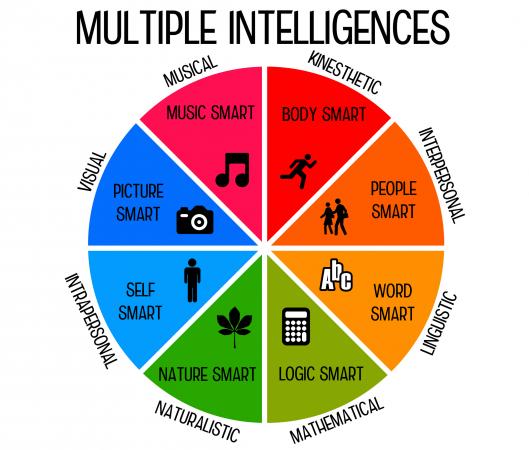
What are you good at?
List your suggestions in the comments to this blog entry.
Take the test at http://www.literacynet.org/mi/assessment/findyourstrengths.html
Download free_multiple_intelligences_test.xls from capsa and try it out!
Questions to consider:
1. Do you trust the results? Why yes, or why no?
2. Does the result reflect your self-evaluation? Or is it somehow different?
WHAT DO YOU BELIEVE NOW? is the MI theory trustworthy?
State your belief/claim in the comment to this blog entry.
___________________
Consider the MI theory implications for teaching.
https://howardgardner.com/2015/10/27/intelligences-in-the-classroom/
Theory:
https://www.excellerate.co.nz/free-online-multiple-intelligence-tests.html
https://www.psychologytoday.com/blog/unique-everybody-else/201311/the-illusory-theory-multiple-intelligences
Gardner's site
Howard Gardner on Youtube
pondělí 6. listopadu 2017
Krashen's Monitor Model

Browse the net and prepare a 5 min presentation/explanation of the principles, implications and drawbacks of the chosen Hypothesis.
Krashen's theory of second language acquisition consists of five main hypotheses:
the Acquisition-Learning hypothesis,
the Monitor hypothesis,
the Input hypothesis,
the Natural Order hypothesis,
and the Affective Filter hypothesis.
SK himself on Language Acquisition
Přihlásit se k odběru:
Příspěvky (Atom)
-
What are you good at? List your suggestions in the comments to this blog entry. Take the test at http://www.literacynet.org/mi/assess...
-
What is information gap? Search online for info-gap materials used for ELT. HOMEWORK: What are the drawbacks and benefits of an inform...
-
1 Review the taxonomies of learning styles. Do you know what these types mean? V-A-R-K Field dependent - Field independent Global -...

